
Emotions are powerful. They hit fast, they hit hard, and sometimes they take over before we even know what’s happening. The DBT model for describing emotions breaks things down so we can understand the process and respond with intention instead of getting swept away. It’s about learning how to recognize what’s going on emotionally—what sets us off, how it shows up, and what we can do about it.
1. What Makes Up an Emotion
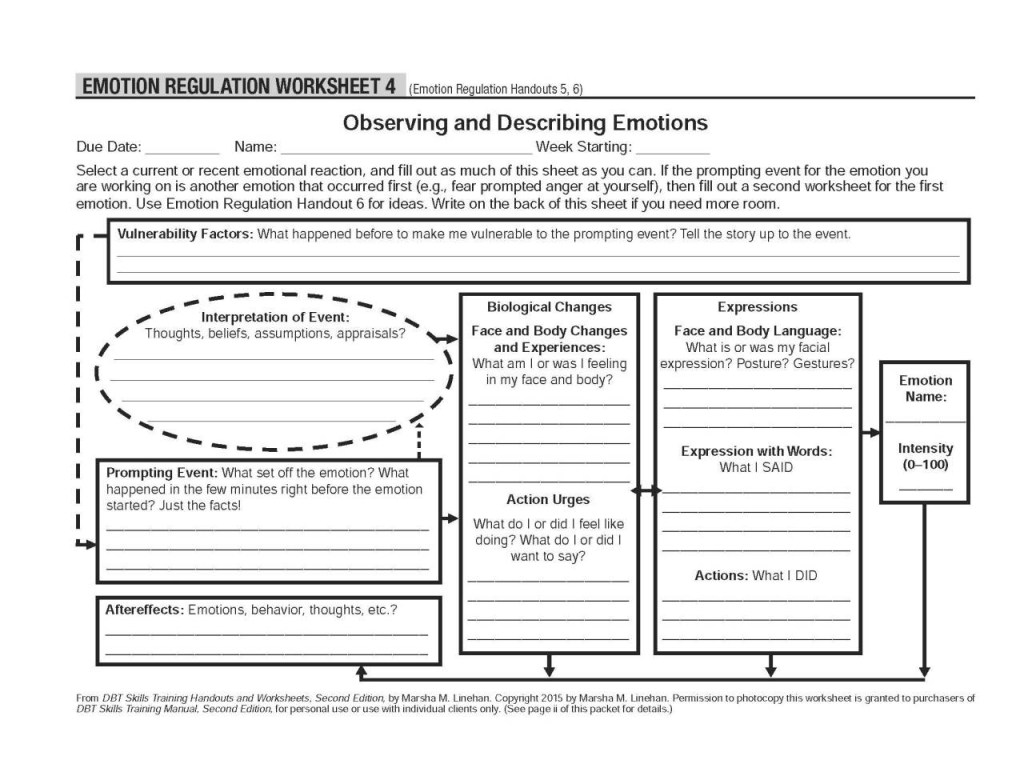
An emotion isn’t just one thing—it’s like a sequence of events. Each step matters, and once you start noticing the patterns, you gain more control over how you respond. Here’s the breakdown:
• Prompting Event: Something happens—inside or outside of you—that sparks an emotional reaction. This could be a conversation, a memory, or even just hunger sneaking in.
• Interpretation: How you make sense of the event plays a huge role. Our thoughts can amplify or calm emotions. For example, thinking “they don’t care about me” is going to hit different than “maybe they were just having a bad day.”
• Emotional Experience: This is the core of what you feel—like sadness, anger, or joy. It’s the emotional flavor of the moment.
• Body Sensations: Emotions don’t just stay in your head—they live in your body too. Think about a racing heart with anxiety or that heaviness in your chest with grief.
• Action Urge: Each emotion comes with a built-in urge. Anger might push you to yell, fear to hide, and joy to connect.
• Behavior: What you actually do with the emotion. Do you express it? Stuff it down? Lash out? This part is where we often get stuck.
• Aftereffects: Emotions tend to leave a trail. They shape your thoughts, mood, and body long after the moment passes.
2. Primary vs. Secondary Emotions
• Primary Emotions are the first things that show up—raw and automatic, like feeling scared when someone yells.
• Secondary Emotions are what come next. Sometimes they show up as a reaction to the primary emotion, like feeling ashamed after getting angry, or they’re based on how we interpret things. Secondary emotions can complicate things fast.
3. Why Emotions Matter
Emotions might feel like they get in the way sometimes, but they serve a purpose.
• They Motivate Action: Fear pushes you to protect yourself; sadness signals the need to slow down and heal.
• They Help You Connect: Whether you’re smiling or crying, emotions communicate something to others.
• They Give You Info: Emotions clue you in on what’s important to you, what you need, and where boundaries might be getting crossed.
4. The Trouble with Emotions
Let’s be real—emotions can get messy. Some of the common struggles include:
• Emotional Sensitivity: Some people feel emotions stronger or longer than others, which makes it harder to shake them off.
• Holding Back: Maybe you learned that showing emotions isn’t “safe” or “acceptable,” so you keep them bottled up. That can lead to emotional overload later.
• Impulsive Actions: Sometimes, we go straight from feeling to doing, without slowing down to think. It’s easy to act on an emotional urge and regret it later.
5. Using DBT Skills to Regulate Emotions
DBT gives us tools to slow down, make sense of our emotions, and respond in ways that work better for us. Some go-to skills include:
• Mindfulness: Notice what you’re feeling in the moment, without judging yourself for it. Just observe it like a curious bystander.
• Opposite Action: If the action urge isn’t helpful, do the opposite. For example, if you feel like isolating, try connecting with someone instead.
• Check the Facts: Sometimes emotions don’t fit the facts. Take a step back and ask: “Is this really what’s happening, or is my brain spinning a story?”
• PLEASE Skills: Take care of your body (sleep, food, exercise) so you’re not emotionally vulnerable. It’s a lot easier to manage feelings when you’re physically balanced.
6. The Goal: Respond, Don’t React
The whole point of understanding emotions through the DBT model is to stop reacting on autopilot and start responding with intention. Emotions will still show up, but you’ll be better equipped to manage them. It’s not about controlling or getting rid of feelings—it’s about learning how to ride the wave without wiping out.
When you can name your emotions, understand why they’re there, and choose how to respond, you move from just surviving to living intentionally. This makes space for healthier relationships, clearer boundaries, and a deeper sense of connection—with yourself and others.
 Being Human
Leave a comment